

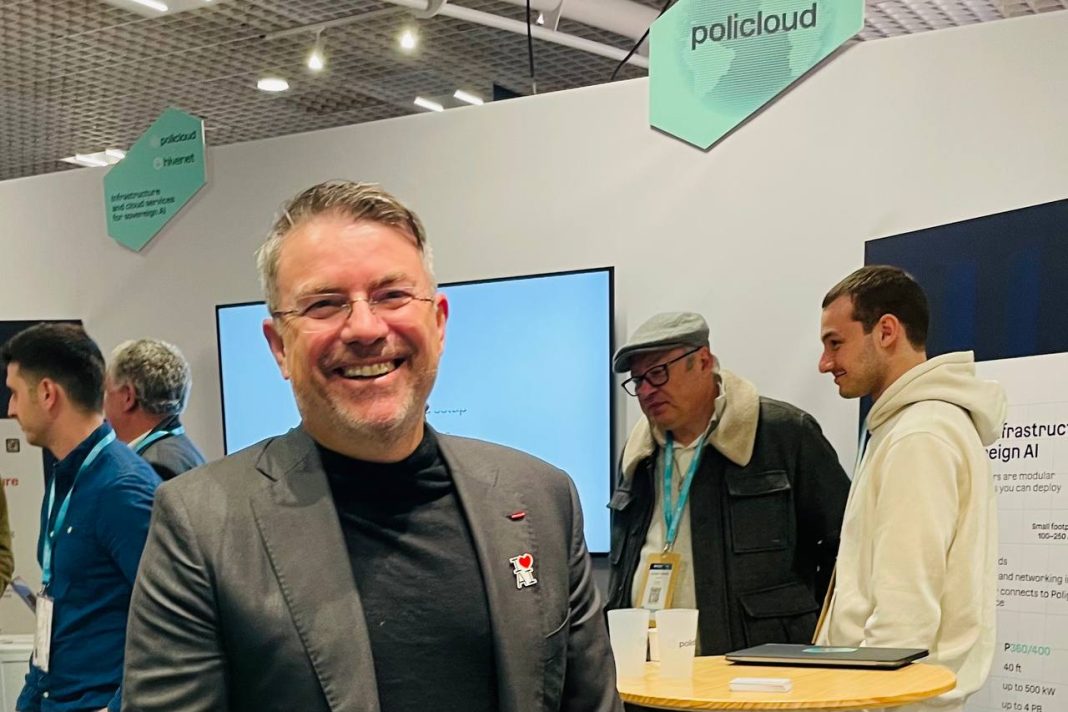
Why protecting your digital wealth matters as much as protecting your car collection
An interview with David Gurle for City 4 VIP
In the world of wealth, protecting valuable assets is a familiar discipline. Collections of classic cars are stored in carefully selected garages, artworks are placed in secure vaults, and yachts are kept in the most trusted marinas.
But in today’s digital economy, one of the most valuable assets is often invisible: data.
City 4 VIP spoke with technology entrepreneur David Gurle about why digital infrastructure is becoming a strategic priority for entrepreneurs, investors, and private wealth.
From Communication Pioneer to Cloud Innovator
CITY 4 VIP: You have been involved in some of the most important communication technologies of the digital era. Can you tell our readers about your journey?
David Gurle:
I started my career as an engineer and entrepreneur in internet communications. During my time leading the real-time communications business at Microsoft, we developed collaboration products like NetMeeting, Windows Messenger, Exchange IM, and Office Communications Server.
Later, I joined Skype as Vice President of the business unit, working on encrypted messaging technologies and communication platforms.
Over the years I founded six companies in the technology sector. My work was recognized when I was included in Vanity Fair’s “New Establishment” ranking, and I was honored to receive the Légion d’Honneur from Emmanuel Macron for contributions to the digital world.
Today my focus is on a different challenge: how data and computing infrastructure are owned and controlled.
Why Data Should Be Treated Like a Luxury Asset
CITY 4 VIP: Many people still think of data as something abstract. Why do you compare it to physical assets?
David Gurle:
Because the logic is exactly the same. If you collect rare cars, you would never park them randomly on the street. You carefully select the garage where they are stored.
Your data deserves the same attention.
Your personal information, communications, financial records, intellectual property — all of that has enormous value. The question is simple: where is it stored and who controls it?
Challenging the Dominance of Hyperscale Cloud Platforms
CITY 4 VIP: The cloud infrastructure market today is dominated by a few global technology companies. Why did you decide to build an alternative?
David Gurle:
The hyperscale cloud market is dominated by companies like Amazon, Google and Microsoft.
There is nothing inherently wrong with that — they invested enormous resources to build those platforms. But the model encourages customers to stay inside a single ecosystem.
Once you move everything into that environment, it becomes difficult to leave.
With my companies Hivenet and Policloud, we wanted to create a different approach.
Instead of centralized data centers, we use distributed infrastructure — micro-data centers and computing capacity located closer to users and energy sources.
The idea is simple: the door should always remain open. Customers should be able to move their data and applications freely.
Data Sovereignty and Digital Identity
CITY 4 VIP: Why is data sovereignty becoming such an important topic today?
David Gurle:
Because our identities are becoming increasingly digital.
Every action online leaves a trace. Communications, financial transactions, professional activities — all of it creates a digital footprint that may exist indefinitely.
For entrepreneurs, investors, and international families, this data can include extremely sensitive information.
So the real question becomes: under which jurisdiction is your data stored and who has access to it?
That is what we call data sovereignty.
Encryption as the Foundation of Security
CITY 4 VIP: What is the most effective way to protect sensitive information?
David Gurle:
Encryption.
At our companies we follow strict international standards such as ISO 27001 for data center security. But beyond compliance, the most important principle is that the customer owns the encryption keys.
If the customer controls the keys, the data remains protected even if infrastructure is compromised.
Encryption must apply both when data is stored and when it is being transmitted.
Without that, you are exposing your most valuable digital assets.
Artificial Intelligence Is Raising the Stakes
CITY 4 VIP: How is the rise of artificial intelligence changing the importance of infrastructure?
David Gurle:
AI requires enormous computing resources and vast volumes of data.
That makes infrastructure both expensive and strategically important.
One of our objectives is to provide a much better price-performance ratio. Instead of spending $100,000 on infrastructure, companies may achieve the same performance for $20,000 with the right architecture.
For innovative companies, that difference can determine whether a project becomes viable.
Building Local Ecosystems and Private Digital Infrastructure
CITY 4 VIP: Could digital infrastructure eventually be developed for private communities or real estate ecosystems?
David Gurle:
Yes, absolutely.
One of the most interesting developments is the creation of local digital ecosystems.
Instead of relying only on distant mega data centers, micro-data centers can be integrated into local infrastructure — for cities, innovation districts, private estates, or residential communities.
In some cases, these infrastructures can even use local or unused energy capacity.
Around the world there are many places where energy exists but cannot be efficiently used because it is not connected to large grid systems. That energy can power local computing infrastructure and AI clusters.
This approach opens interesting possibilities for private communities, advanced smart-city districts, and high-security environments that want greater control over their data.
Sovereignty in a Changing Geopolitical Landscape
CITY 4 VIP: How do geopolitical changes influence the future of digital infrastructure?
David Gurle:
Geopolitics now plays a major role.
Countries and organizations are becoming more aware of the strategic importance of infrastructure and data.
For me, sovereignty simply means having options.
If you depend entirely on one provider or one jurisdiction, you lose flexibility.
But if you have multiple options — multiple infrastructures — you can make better decisions for your organization or your personal ecosystem.
The Future of Digital Wealth
CITY 4 VIP: If you could leave our readers with one piece of advice, what would it be?
David Gurle:
Treat your data the way you treat your most valuable assets.
You would not leave a rare car unprotected or place a valuable artwork in an unsafe location.
Your digital identity and your personal data are becoming even more valuable than those physical assets.
So the question you should always ask yourself is very simple:
Where is my data stored — and who holds the keys?