
Inside the new era of yacht engineering — from Volvo Penta’s collaboration with Sanlorenzo to the luxury of silent cruising
Cannes Yachting Festival 2026 | Vieux Port, Cannes
There is a moment at every yacht show when the conversation moves beyond beautiful lines and polished teak.
The champagne continues to flow. Owners and buyers step between yachts. Designers discuss materials, captains compare specifications and shipyards present their latest visions of life at sea.
But underneath the glamour, another conversation is taking place.
How should a luxury yacht move through the world in the next decade?
At the Cannes Yachting Festival 2026, one of the most interesting answers came from Volvo Penta, whose latest marine engineering is bringing hybrid propulsion into a new generation of larger yachts.
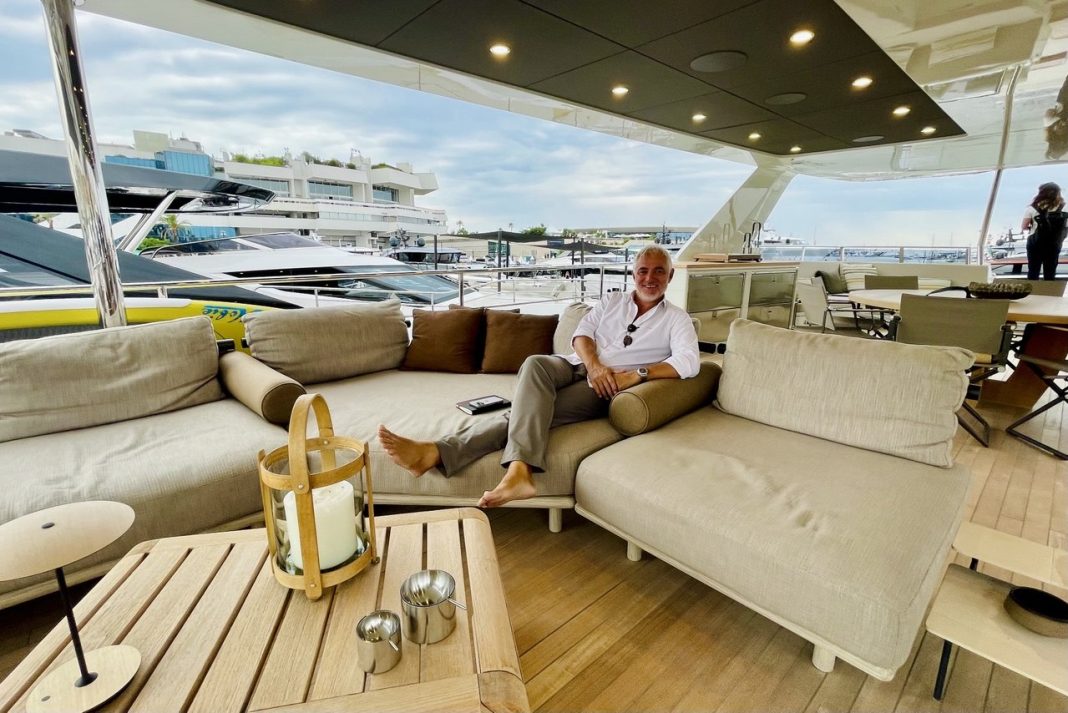
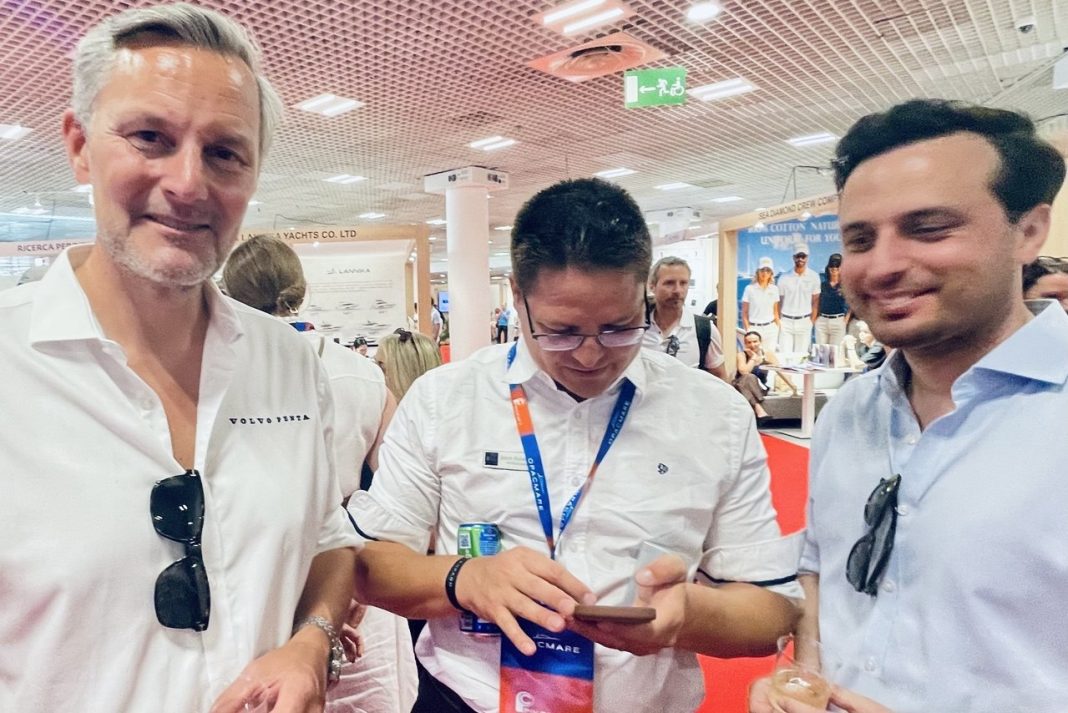
At the centre of that story is Martin Jufors, Vice President of Marine Sales at Volvo Penta, a familiar figure in the marine industry and one of the executives connecting the company’s propulsion technology with the evolving expectations of yacht builders and owners.
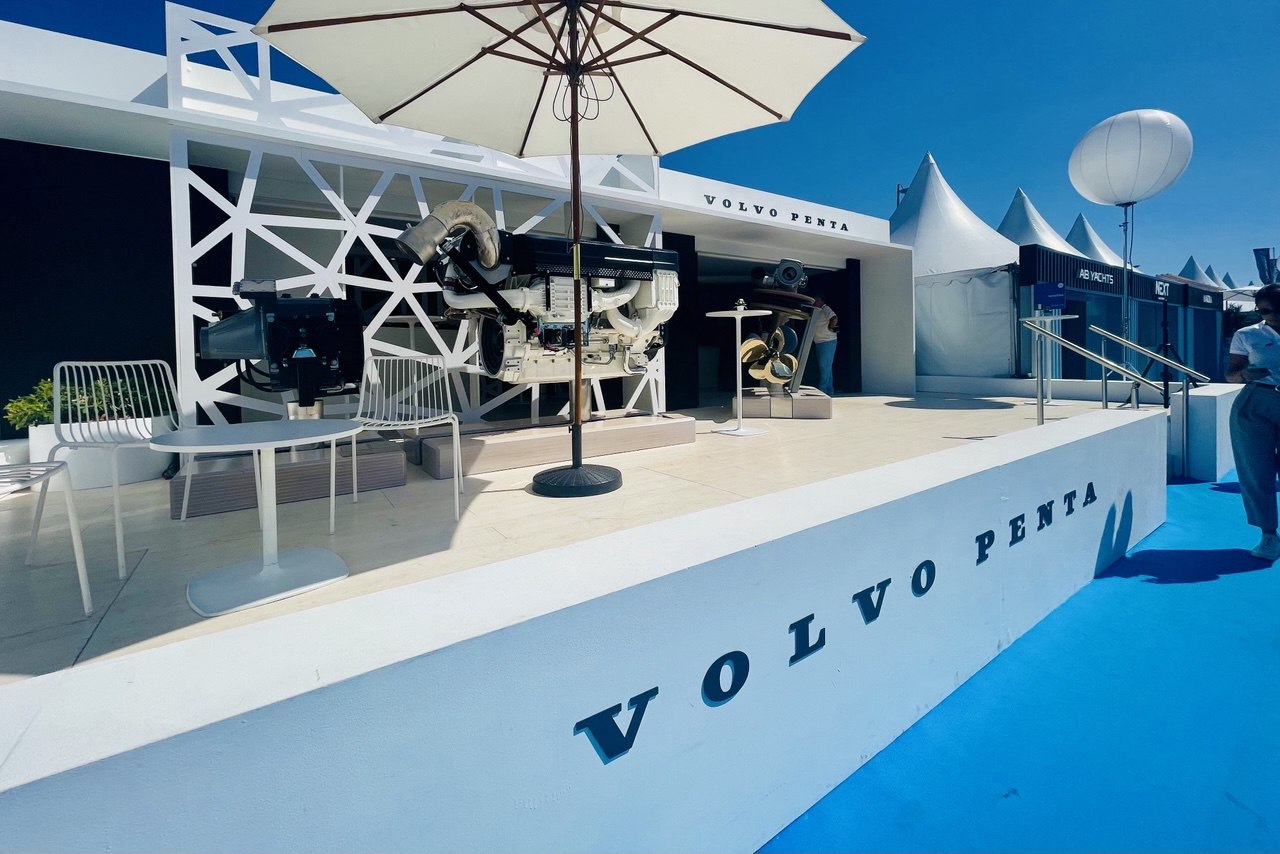
And Cannes provided the perfect setting. Because when you are standing beside a €multi-million yacht in the Vieux Port, technology is no longer an abstract engineering conversation. It becomes personal.
WHEN THE ENGINE DISAPPEARS
For generations, yacht performance was associated with numbers.
Horsepower. Speed. Range. Engine size. Today, some of the most interesting innovations are measured differently.
Noise. Comfort. Efficiency.
Time spent away from the generator.
Volvo Penta’s new D13 IPS Hybrid is designed around this shift.
The system combines the company’s IPS propulsion architecture with electric motors and battery energy, creating a dual-energy solution designed to give yacht owners greater flexibility in how they use their vessel.
The D13 IPS Hybrid is also compatible with HVO100 renewable fuel, adding another option for owners and builders looking to reduce the environmental impact of cruising without abandoning conventional marine propulsion altogether.
But the most interesting part of the technology may have nothing to do with sustainability headlines.
It is what happens when the yacht becomes quiet.
THE SANLORENZO CONNECTION
At Cannes, Volvo Penta’s hybrid technology became particularly tangible through its collaboration with Sanlorenzo.
The newly presented Sanlorenzo SHE, a 25.5-metre yacht inspired by the elegance of 1960s Italian yachtmaking, is the first Sanlorenzo application of Volvo Penta’s innovative IPS Hybrid system.
It is an unusually beautiful meeting of engineering and design. On one side, Sanlorenzo’s philosophy of restrained Italian elegance. On the other, Volvo Penta’s increasingly sophisticated approach to propulsion.
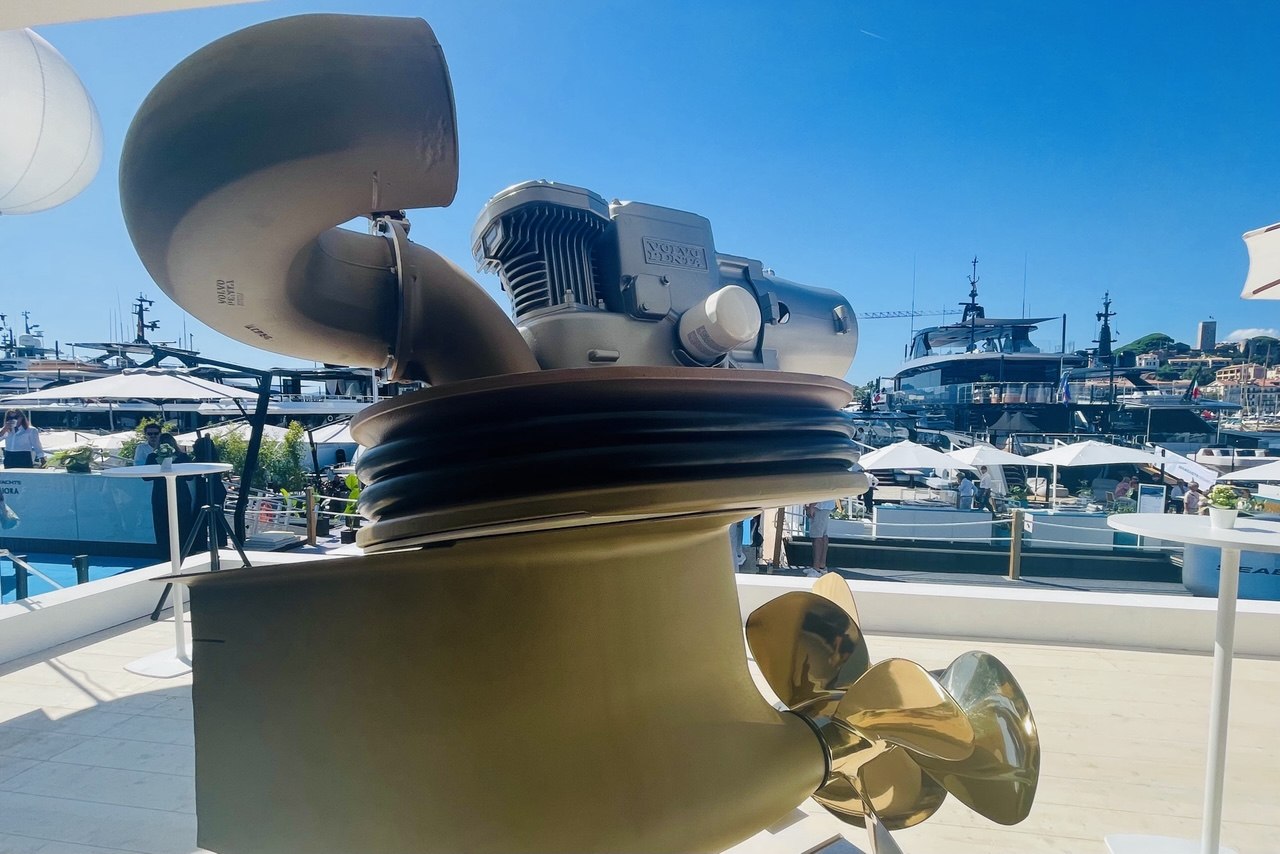
The result is not technology for technology’s sake. The engineering is designed to disappear into the experience. And that may be the ultimate luxury.
WHAT DOES HYBRID ACTUALLY FEEL LIKE?
For a yacht owner, the question is much more interesting than “How does the hybrid system work?”
The better question is:
“What changes when I have it?”
Imagine arriving at a beautiful Mediterranean anchorage late in the afternoon.
The engines stop. The yacht remains calm.
Instead of immediately hearing the familiar background rhythm of generators powering the hotel systems, the boat can draw on stored electrical energy.
The water moves. The wind changes.
Someone pours another glass of wine. And the machinery becomes almost invisible.
That is where engineering becomes lifestyle.
Volvo Penta’s hybrid approach is designed to support quieter operation, electric propulsion capability and reduced reliance on combustion engines in appropriate operating conditions. The company’s D13 IPS Hybrid system uses electric motors alongside the diesel engines, allowing the propulsion system to adapt to different moments of a yacht’s journey.
For owners, this can mean something surprisingly simple:
more time experiencing the sea, and less time noticing the machinery that makes the experience possible.
THE NEW STATUS SYMBOL: SILENCE
There was a time when the most impressive yacht in the marina was the one with the largest engines.
Today, the definition of luxury is becoming more subtle. A yacht owner may still want speed. But they may also want to sleep at anchor without generator noise. They may want to entertain outdoors without machinery competing with conversation. They may want to cruise with greater efficiency. They may want a yacht capable of combining traditional propulsion with electric operation. And increasingly, they want technology that does not dominate the interior design. This is particularly important in the modern luxury-yacht market, where architecture and interiors have become as important as engineering. The best technology is no longer necessarily the technology guests can see.
It is the technology they feel. Or don’t feel.
CANNES AS A LIVING LABORATORY
Walking through the Cannes Yachting Festival, this evolution becomes visible everywhere.
The yachts are becoming larger, but the experience is becoming more intimate. Outdoor spaces are becoming extensions of the salon. Master suites are becoming private apartments. Glass is opening the interior towards the sea.
And propulsion systems are increasingly being designed around comfort, efficiency and reduced environmental impact.
Volvo Penta’s presence at Cannes therefore represented something larger than a new engine programme.
It reflected a broader market transition.
The company presented its latest hybrid propulsion technologies, including the D13 IPS Hybrid and D13-IPS1350H, as part of the next generation of marine propulsion.
For yacht builders, the challenge is no longer simply to create more powerful yachts.
It is to integrate advanced engineering without compromising the elegance, space and emotional experience owners have come to expect.
MEETING THE PEOPLE BEHIND THE MACHINES
This is also why meeting people such as Martin Jufors matters at a yacht show. A specification sheet can tell you the power output. It cannot tell you where the industry is going.
A conversation with a senior marine executive can reveal something much more valuable: what yacht builders are asking for, what owners are beginning to demand and which technologies are moving from experimental to commercially relevant.
Jufors’ role sits directly at that intersection between Volvo Penta’s technology and the marine market. His career with Volvo Penta has included senior marine-sales responsibilities, and the company has positioned its marine business around propulsion, onboard integration, performance and customer experience.
For journalists, yacht owners and prospective buyers, this makes the conversation particularly relevant.
Because the future of yachting will not be decided by technology companies alone.
It will be created together with the shipyards that integrate the systems, designers who shape the spaces around them and owners who ultimately decide what they want their time at sea to feel like.
FROM HORSEPOWER TO HUMAN EXPERIENCE
Perhaps the most fascinating development is that hybrid propulsion does not ask the owner to choose between performance and sustainability.
It is about giving the yacht more ways to operate.
Traditional engines remain available when range and power demand them. Electric propulsion can provide another mode for appropriate conditions. Battery systems can support onboard energy needs.
HVO100 offers another fuel option.
And integrated systems can make the entire experience quieter and more refined. For a luxury yacht owner, flexibility is the real privilege. The ability to decide how the yacht behaves according to the moment. Fast when you want to cross open water. Quiet when you arrive. Efficient when you are anchored. Comfortable when you are entertaining. Invisible when technology has done its job.
THE FUTURE IS QUIETER
Back in Cannes, the sun begins to fall over the Vieux Port. Yachts glow against the Mediterranean. Guests move between receptions. Champagne glasses catch the last light.
And somewhere beneath the polished decks, sophisticated propulsion systems are quietly changing what luxury at sea can mean. Perhaps this is the real revolution. But quieter, smarter and more considered.
Volvo Penta’s collaboration with Sanlorenzo offers a glimpse of that future: engineering that respects the beauty of the yacht rather than competing with it.
For the owner, the reward is ultimately very simple.
More comfort. More choice. More freedom.
And, perhaps most importantly, the possibility of hearing what you came to the Mediterranean for in the first place:
the sea.
CITY for VIP | Event Reporter
Reporting from the Cannes Yachting Festival 2026