

Italian contemporary artist Massimo Bartolini (born 1962, Cecina, Italy) is among the most respected figures working in large‑scale installation, immersive experience, video and photography. His site‑specific and space‑transforming projects invite viewers to rethink how we experience architecture, sound, time and space — making him a standout presence in major international exhibitions including Venice Biennale and, increasingly, global art fairs like Art Basel.
A Multidimensional Artistic Practice
Bartolini’s work resists easy categorization. While rooted in installation art, his practice traverses sound sculpture, performance, video, photography and audience interaction spaces. His installations are conceived as environments rather than objects, and many unfold over hours or involve sound and bodily presence, revealing a commitment to transforming perceptions rather than simply presenting objects.
He has exhibited at many major international venues, including multiple editions of the Venice Biennale (1999, 2009, 2013 and representing Italy’s pavilion in 2024) and Documenta 13 (Kassel, 2012). His work is held in the permanent collections of the National Gallery of Canada (Ottawa), MAXXI (Rome), Castello di Rivoli (Turin), Fundació La Caixa (Barcelona), Museum Voorlinden (Wassenaar) and the Olnick Spanu and Magazzino Italian Art Collection (New York).
Art Basel 2025: Context and Presence
At Art Basel 2025, Bartolini’s presence in the program and surrounding collector events underscored his long‑standing influence in contemporary art. While the fair itself is primarily oriented toward gallery presentation and private sales, Bartolini’s installations and projects often function outside traditional booth environments — extending into performance, sound and architectural experience. His work is especially compelling to collectors and institutions seeking experiential, site‑responsive art that transcends standard two‑ or three‑dimensional mediums.
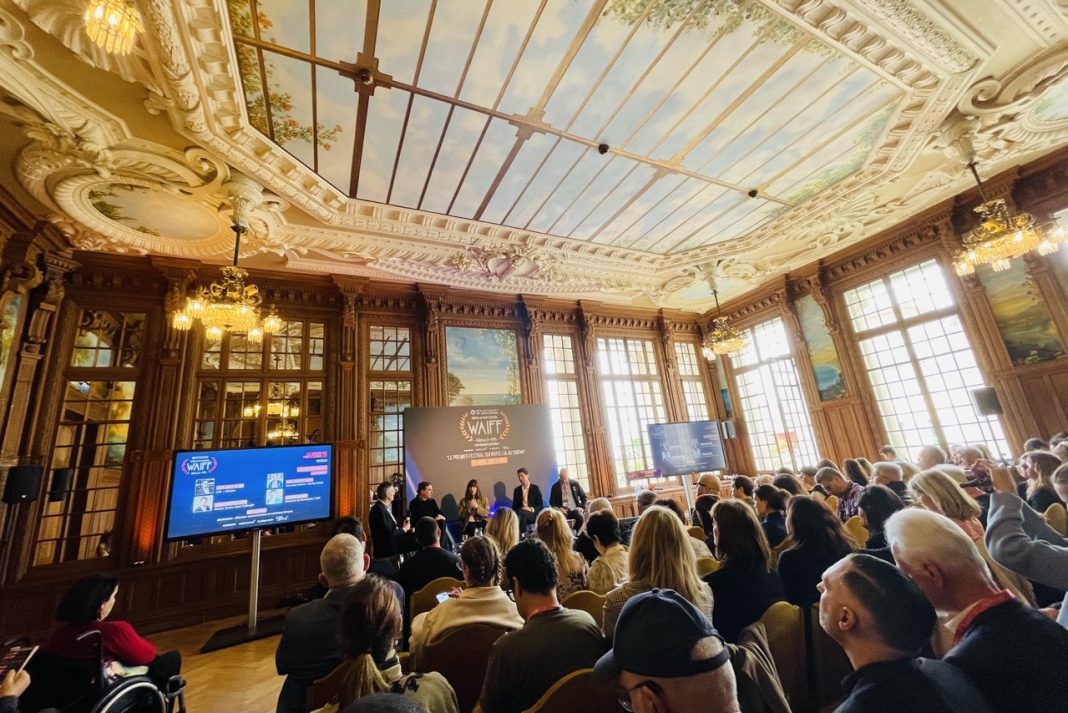
During the fair, Bartolini participated in artist talks and special events, enhancing dialogue around how installation work speaks to large international audiences and collector communities. One noted event included a book signing for Due qui / To Hear in the Exchange Circle at Art Basel organized in conjunction with Frith Street Gallery, which charted his major Venice Biennale project and related immersive works, drawing collectors, curators and press alike.
Gallery Representation and Market Presence
Bartolini is represented by several leading contemporary galleries with international reach:
-
Massimo De Carlo (Milan) — a gallery actively showing significant installations and historical works and hosting major exhibitions of Bartolini’s work over decades.
-
Frith Street Gallery (London) — represent his immersive installations and complex sculptural works.
-
Magazzino (Rome/New York) — also represents him, particularly for body of work that intersects painting, sculpture and spatial transformation.
These galleries handle institutional inquiries, project commissions, large installations and collector sales, typically by inquiry rather than fixed retail price list — a common practice for complex, large‑scale installation artists whose costs vary by project.
Art Pricing and Collector Market
Because much of Bartolini’s work is site‑specific and experiential, many of his most ambitious projects (such as national‑pavilion presentations) are commissioned outright by institutions rather than sold on the open market. For his smaller editions and works on paper, there are transparent market examples:
-
Editions and limited prints (such as Bartolini’s Diptych photoetchings from 2014) have been listed in secondary markets for roughly €1,300–€1,800 (about US$2,300 on platforms like Artsy).
-
Earlier secondary‑market auction results show a wide range, with smaller mixed‑media works selling from a few hundred euros up to €4,000–€6,000 for certain drawings or installations on paper.
-
At fairs such as Artissima, individual pieces by Bartolini — including enamel‑on‑aluminum works from the Rugiada series — have been offered around €30,000, reflecting collector interest in his more portable work.
Larger installations are often commissioned by museums, biennials or public programs, with budgets set project by project.
Notable Bartolini Projects
Venice Biennale 2024 – Italian Pavilion: Due qui / To Hear
Bartolini’s Italian Pavilion project at the 60th Venice Biennale (2024) — titled Due qui / To Hear — was an immersive sound and environmental installation that transformed the pavilion using engineered structures, motors, and compositions by contemporary musicians. The project emphasized listening, communal experience and spatial awareness, seen by critics as a benchmark in experiential installation art. Its production was reported to cost around €1.2 million — part institutional sponsorship, part government support.
Earlier Exhibitions
Bartolini’s work has also been exhibited at institutions including the Fruitmarket Gallery (Edinburgh), where his installations were integrated with small sculptural and paper works, expanding the dialogue between intimate objects and environment‑scale pieces.
Encountering the Artist: Meeting and Engagement
Meeting Massimo Bartolini in person typically happens in several art‑world contexts:
-
Attending gallery openings and solo exhibitions at Massimo De Carlo, Frith Street Gallery or Magazzino — especially in Milan, London or Rome — where artist lectures and receptions are often scheduled.
-
Visiting biennials and institutional openings (e.g., Venice Biennale, Documenta, national or international triennials) where Bartolini participates in talks, symposiums and public dialogues.
-
Art fairs such as Art Basel occasionally host book signings, panel conversations or special events featuring Bartolini — an excellent opportunity for direct engagement with the artist and his audience.
Collectors interested in encountering the artist should connect through galleries representing him, subscribe to exhibition announcements, and participate in VIP programming at major international events where he is scheduled to appear.
Critical and Artistic Impact
Bartolini’s contributions to contemporary art are anchored in a practice that dissolves boundaries between architecture, sound, perception and social space. His installations do not merely fill space — they redefine it, creating environments that encourage reflection, interaction and embodied experience.
His work has not only shaped Italy’s international art identity (marked by his selection to represent the Italian Pavilion multiple times) but also influenced young artists exploring time, sound and space as structural media rather than decorative or representational ones.
Conclusion
Massimo Bartolini stands among Italy’s most innovative contemporary artists, with a practice that marries architectural immersion, sonic experience and perceptual awareness. Whether through commissioned biennial installations, gallery exhibitions or private collector engagements, his work continues to expand how museums, galleries and audiences conceive of what art can be. His presence at Art Basel 2025 reaffirmed his relevance in a global context where installation art engages both institutional audiences and private collectors in new creative dialogues.