

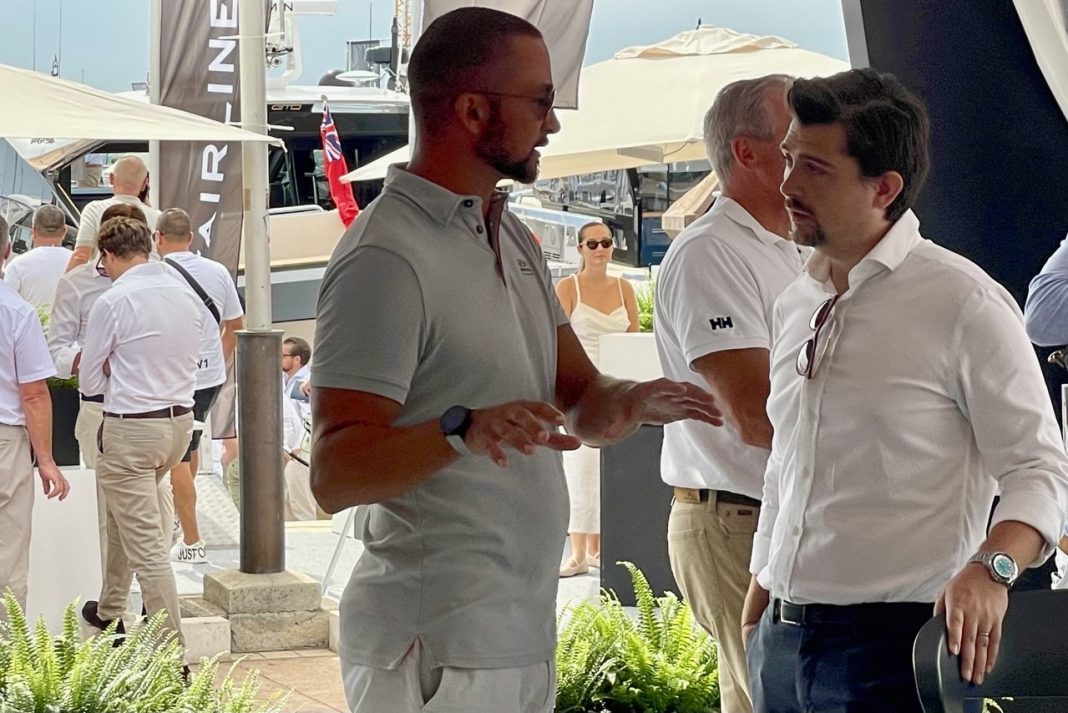
At the Cannes Yachting Festival 2026, Fairline unveiled the Targa 58 GTO — while its leadership revealed a broader vision for the next seven years of British yacht building.
There is a particular kind of elegance to a British yacht arriving in Cannes: restrained, confident and unmistakably designed for life beyond the marina.
At the Cannes Yachting Festival 2026, held from 8–13 September across the Vieux Port and Port Canto, Fairline Yachts brought that philosophy into focus with the world premiere of its new Targa 58 GTO — a model positioned at the top of the Targa range and designed around the meeting point of open-air freedom and Grand Touring comfort.
But the most interesting story behind Fairline in Cannes was larger than a new yacht.
It was about a British brand rebuilding its foundations, protecting its manufacturing identity and planning its next chapter with unusual patience.
A new vision for Targa
The Targa 58 GTO became one of Fairline’s key attractions at Cannes, introducing what the company describes as a new vision for the Targa family.
Its design is centred on the relationship between interior and exterior space: expansive glazing, open-air living and social areas designed to make the transition from salon to sea feel almost invisible.
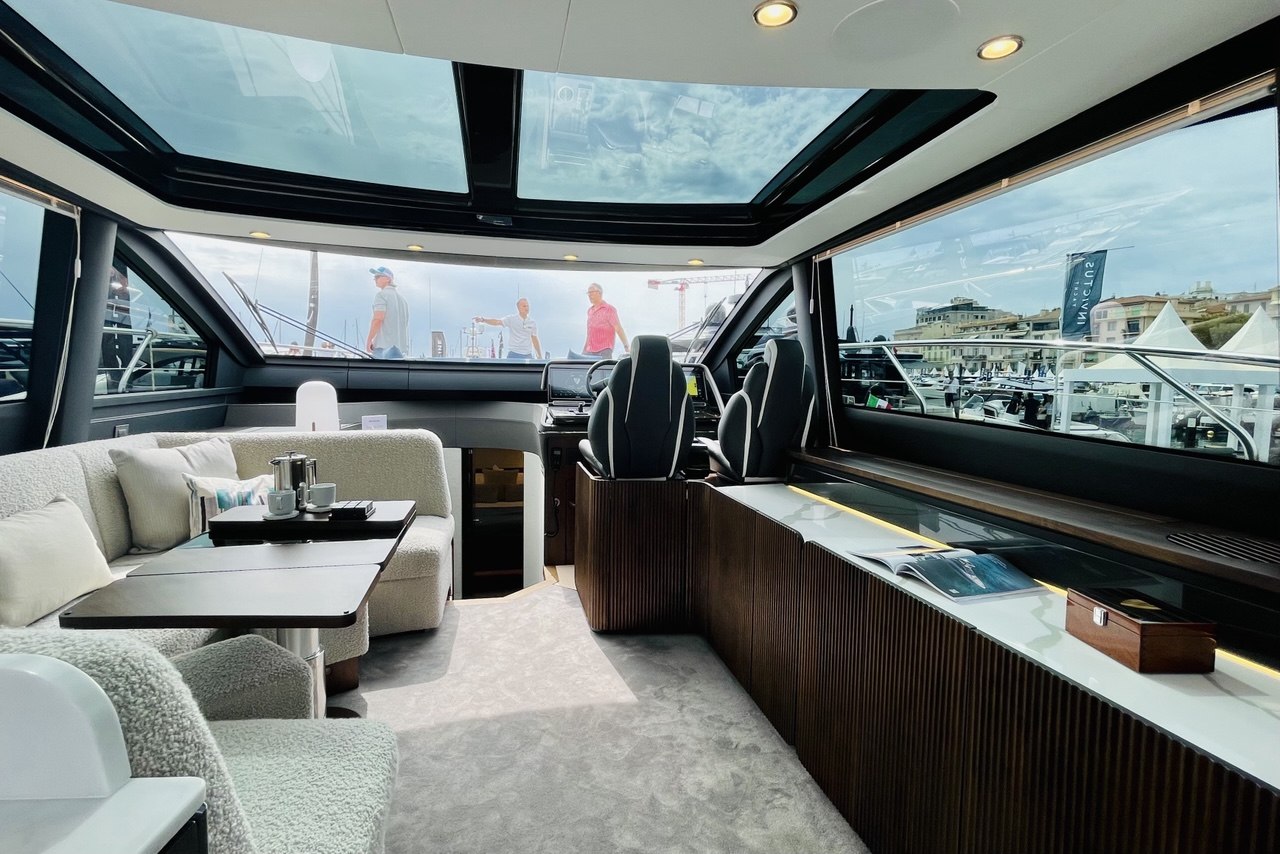
The philosophy is distinctly Mediterranean, even though the yacht itself begins its life much further north, at Fairline’s historic production base in Oundle, Northamptonshire.
The Targa range currently spans the Targa 40, Targa 47 Open, Targa 47 GT, Targa 50 Edition and the new Targa 58 GTO. Fairline describes the range as combining open-air living with the versatility required for everything from spontaneous coastal escapes to longer cruising.
At Cannes, the 58 GTO represented more than an additional model. It demonstrated Fairline’s intention to move carefully upwards while remaining recognisable as a Fairline.
As joint CEO Oliver Southwell has put it, the company is conscious of its core identity: “We produce quality, luxury weekenders. We’re not here trying to reinvent the wheel.”
That sentence perhaps explains the yacht better than any specification sheet.
Seven years — and a longer view
Behind the polished Cannes presentation is a significantly more ambitious business strategy.
Following the acquisition of Fairline in 2025 by Bronzewood Capital, Southwell and fellow co-CEO Daniel Mundy have been working on a long-term restructuring of the business. According to Southwell, Fairline is now operating with a seven-year plan for new model introductions, rather than treating each launch as an isolated event.
The approach is deliberately structured.
The Targa family remains central to the current portfolio, with the Targa 47 Open, Targa 47 GT and Targa 58 GTO forming a significant part of the 2026 product programme. Fairline’s official 2026 communications also state that the company’s order book was complete for 2026, with demand continuing into 2027.
For a luxury yacht brand, such planning is about more than new silhouettes.
It is about production capacity, dealer confidence, after-sales support and the ability to deliver the experience promised at the moment a client steps aboard.
Back to Britain
Perhaps the most significant element of Fairline’s current strategy is something that cannot be seen from the water. It is the factory.
Fairline continues to build its yachts in Oundle, maintaining its British manufacturing base while investing in its facilities and production processes. The company says every yacht is assembled, checked and refined in the UK before delivery.
In 2026, Fairline announced that it had secured a new 10-year lease for its traditional Oundle home, comprising three dedicated units and more than 15,000 square metres of production space.
That decision gives the phrase Built in Britain a physical meaning.
It is not simply a heritage reference. It is part of the company’s forward-looking manufacturing strategy.
Southwell has also spoken about the people behind that strategy, noting that many Fairline craftsmen and women have spent decades working with the brand. The company currently employs around 243 people, according to Southwell’s 2026 comments.
For an industry increasingly shaped by global supply chains, Fairline is therefore placing a particular value on continuity of place, skills and production knowledge.
A dealer network with a different role
The transformation is also reaching beyond the shipyard. Fairline is restructuring and strengthening its international dealer network, with an emphasis on relationships that extend beyond the initial yacht sale.
The company’s current dealer model is designed to support owners from the first enquiry and sea trial through servicing, upgrades and long-term ownership.
That strategy was visible around the Mediterranean market in 2026, including a renewed Fairline presence in Italy through Yachts Collection and a new Scandinavian partnership with Sundal Yacht covering Norway, Sweden and Denmark. Southwell described the Scandinavian appointment as an important step in developing a stronger dealer network.
For today’s yacht owner, the relationship with the brand does not necessarily end when the keys change hands.
Increasingly, it begins there.
Confidence, expressed through warranty
Fairline has also made a tangible statement about its confidence in the product.
In April 2026, the company extended its standard warranty on new yachts from one year to three years, applying the new coverage to future orders and eligible stock boats built since 2025.
It is a relatively practical announcement compared with the glamour of a Cannes premiere — but perhaps one of the more meaningful.
A yacht may be photographed beautifully in Cannes. Its real reputation is created over years of ownership.
Sustainability: quietly becoming part of the conversation
The next chapter is also expected to involve a more considered approach to manufacturing.
Fairline has highlighted the use of recycled PET foam-core materials, CNC-produced timber and foam kits designed to improve material yield and reduce waste. The company has also been examining UV films for upper-deck glazing to reduce heat gain and improve air-conditioning efficiency.
Southwell has acknowledged that sustainability is not yet necessarily the first question every yacht buyer asks, but expects environmental considerations to become increasingly important for younger generations and the industry as a whole.
For Fairline, this appears less about attaching a fashionable label to a yacht and more about examining how a yacht is made — and eventually how it might be dismantled and recycled at the end of its life.
The Fairline aesthetic
Across the range, the philosophy remains remarkably consistent.
The F//LINE is the expressive, performance-led member of the family, created for shorter escapes and open-water enjoyment. The Targa brings together sporty character, flexible indoor-outdoor living and cruising versatility. The Squadron moves towards flybridge living, panoramic views and generous social spaces, while the Phantom offers a more substantial cruising experience with an emphasis on comfort and space.
Different lifestyles, one visual language.
The boats are contemporary without becoming anonymous; luxurious without relying on excessive ornament. And perhaps that is precisely where the Fairline proposition becomes interesting in Cannes.
From Oundle to the Mediterranean
Cannes has a way of turning yachts into objects of desire.
Sunlight catches the hull. Champagne appears on deck. The Croisette provides the backdrop. For several days, the world’s luxury-yachting community gathers to imagine what life might look like beyond the harbour.
Fairline arrived with something slightly different to say.
The Targa 58 GTO was the headline — but underneath it was a message about continuity.
A British shipyard with more than six decades of heritage is not attempting to become something entirely different. Instead, its new leadership is concentrating on manufacturing in Britain, a seven-year model strategy, a strengthened international dealer network, longer-term owner support and carefully managed growth.
In the words of Oliver Southwell, the focus is on returning Fairline to “sustained profitability and steady growth.”
At Cannes, that future had a very elegant shape. White against the Mediterranean blue. British-built. And already pointing towards the next horizon.