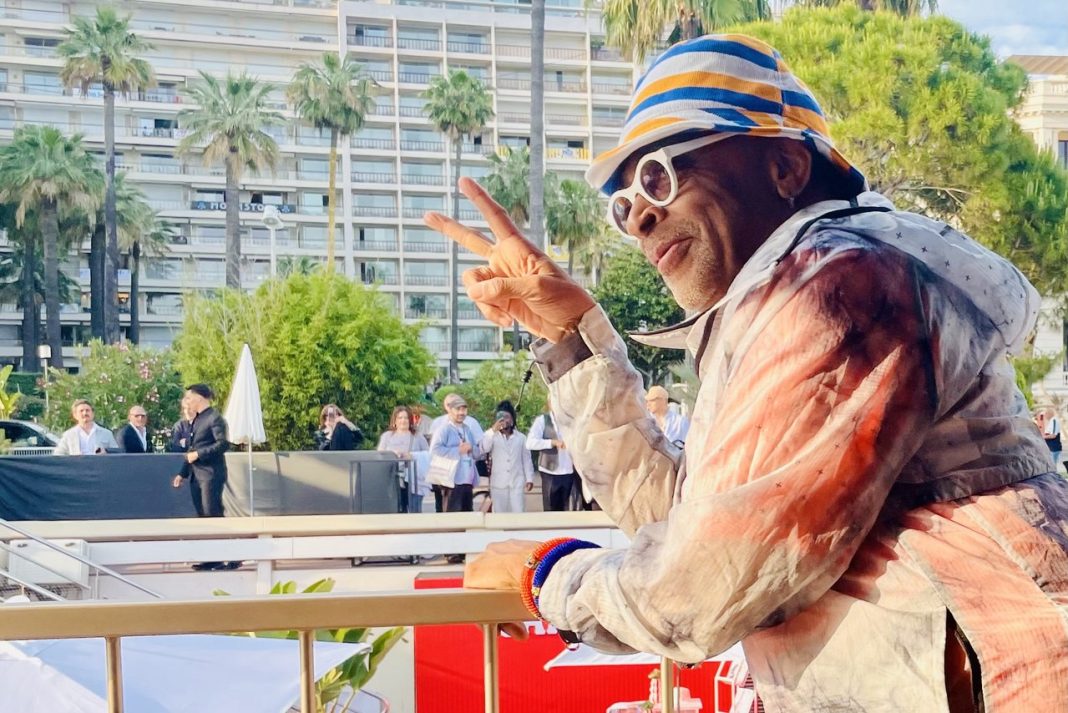

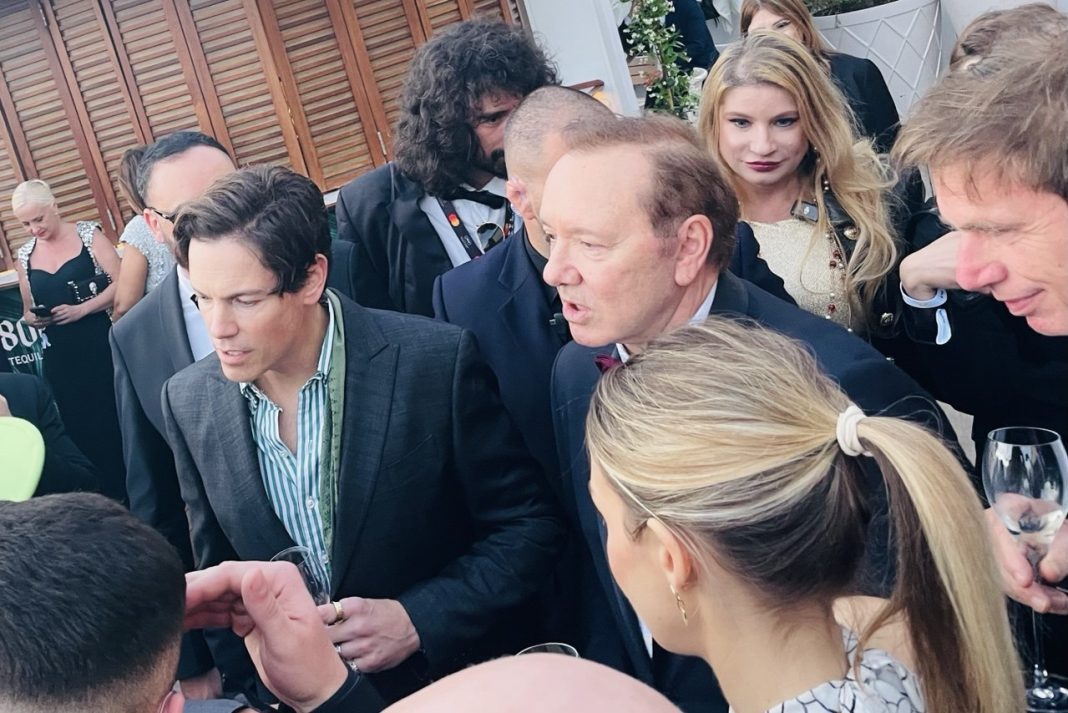
In a quiet, closed-door conversation during an industry gathering on the sidelines of the film festival circuit, Kevin Spacey spoke with unusual candor about a subject that has defined the last chapter of his career: professional collapse. Speaking in an interview-style format, the two-time Academy Award winner compared his experience in Hollywood since 2017 to that of artists who were blacklisted during one of cinema’s darkest eras.
“I’m not saying the situations are identical,” Spacey said carefully. “But I understand, deeply, what it means to be cut off from your profession overnight, to be judged before you are heard, and to watch decades of work vanish in an instant.”
A Career Interrupted
Before the allegations that surfaced in 2017, Spacey’s career stood as one of the most accomplished in modern American acting. He was a dominant presence in film (The Usual Suspects, American Beauty), theatre (Tony and Olivier Awards), and television (House of Cards). He ran London’s Old Vic Theatre for over a decade and was regarded as both a creative force and institutional leader.
“That life ended in a matter of days,” he reflected. “Phones stopped ringing. Projects disappeared. People I’d worked with for years went silent.”
Spacey describes the experience not as a slow decline, but as an abrupt professional erasure. “There was no process. No pause. No waiting for facts. I was simply gone.”
The Blacklist Comparison
During the interview, Spacey referenced the Hollywood blacklist of the late 1940s and 1950s, when writers, directors and actors were barred from working due to alleged political affiliations, often without due process.
“People lost their livelihoods, their reputations, sometimes their sanity,” he said. “Not because of proven crimes, but because of accusations, fear and moral panic.”
Spacey acknowledged the gravity of modern accountability movements, stressing that misconduct allegations must be taken seriously. However, he questioned whether the industry has replaced legal standards with social ones.
“When accusation becomes conviction,” he said, “we are no longer talking about justice. We are talking about exile.”
He pointed out that several blacklisted artists were later vindicated or quietly reinstated, but only after irreversible damage. “By the time history corrects itself,” he added, “the lives are already broken.”
Legal Outcomes and Public Perception
Spacey noted that in recent years he has been acquitted or found not liable in multiple criminal and civil cases in the United States and the United Kingdom. Yet, he emphasized that legal outcomes do not automatically restore careers.
“The verdict doesn’t matter to the algorithm,” he said. “It doesn’t undo the headlines. The damage is permanent.”
He described the paradox of being legally cleared but professionally radioactive. “You can be innocent in court and unemployable in your industry. That’s the modern blacklist.”
Silence, Survival and Self-Reflection
Asked how he endured the isolation, Spacey paused.
“There were moments I didn’t know if I would survive it,” he admitted. “Financially, emotionally, psychologically.”
He spoke about selling property, losing long-standing professional relationships, and reassessing his identity outside of fame. “When the applause stops, you find out who you are without it.”
Unlike the Hollywood blacklist era, where some artists worked under pseudonyms, Spacey says there was no underground route back. “There was no back door. Just silence.”
The Industry’s Future: Due Process or Digital Judgment
Looking forward, Spacey expressed concern about the film industry’s long-term relationship with justice and accountability.
“I worry about a future where fear governs creativity,” he said. “Where producers are afraid to hire, actors are afraid to speak, and stories are shaped by outrage cycles rather than truth.”
He argued that cinema, at its best, has always been about complexity and contradiction. “If we don’t allow for redemption, investigation, or context,” he said, “we lose the very humanity that art is meant to explore.”
A Cautious Return
While Spacey has slowly returned to independent film work, he described the process as fragile and uncertain. “Every job feels provisional,” he said. “As if it could disappear at any moment.”
Yet he remains committed to acting. “It’s not about reclaiming status,” he concluded. “It’s about telling stories again. That’s all I’ve ever known how to do.”
Closing Reflection
Kevin Spacey’s comparison to the Hollywood blacklist is controversial, and he does not deny that the modern era demands accountability. But his central warning is clear: when industries replace due process with permanent exclusion, history has shown the cost can be profound.
“Cinema remembers its mistakes eventually,” he said. “The question is how many people it destroys before it does.”
Hollywood Blacklist (1940s–1950s): Confirmed Historical Cases
The Hollywood blacklist emerged during the Red Scare, when artists were barred from employment due to alleged Communist ties, often without evidence or due process. Careers were severely damaged or destroyed.
Dalton Trumbo – Screenwriter
-
Why blacklisted: Refused to testify before the House Un-American Activities Committee (HUAC).
-
Career damage: Could not work under his own name for over a decade.
-
Impact: Wrote scripts under pseudonyms; secretly won two Academy Awards.
-
Aftermath: Publicly credited in the 1960s; career partially restored.
-
Legacy: Symbol of blacklist injustice.
Charlie Chaplin – Actor / Director
-
Why targeted: Political views and accusations of “un-American activities”.
-
Career damage: Effectively exiled from the United States in 1952.
-
Impact: Lost Hollywood base; films boycotted.
-
Aftermath: Returned decades later to receive an honorary Oscar.
Zero Mostel – Actor
-
Why blacklisted: Alleged Communist associations.
-
Career damage: Lost film and television work for years.
-
Impact: Survived by working in theatre.
-
Aftermath: Major comeback on Broadway (Fiddler on the Roof).
Ring Lardner Jr. – Screenwriter
-
Why blacklisted: Member of the Hollywood Ten.
-
Career damage: Jailed, unemployable for years.
-
Aftermath: Returned to win an Oscar for MASH*.
Edward G. Robinson – Actor
-
Why targeted: Past political affiliations.
-
Career damage: Reputation severely harmed; roles diminished.
-
Impact: Forced to publicly deny beliefs to continue working.
Joseph Losey – Director
-
Why blacklisted: Named in HUAC testimony.
-
Career damage: Left the U.S. permanently.
-
Aftermath: Rebuilt career in Europe, never returned to Hollywood.
Modern-Era “De Facto” Hollywood Blacklisting (Post-2010)
Unlike the historical blacklist, modern cases are not government-mandated, but involve industry-wide exclusionfollowing allegations, controversies, or public pressure.
Harvey Weinstein – Producer
-
Why excluded: Convicted of sexual crimes.
-
Career damage: Company collapsed; imprisoned.
-
Status: Permanent removal from industry.
-
Note: Legal guilt established.
Kevin Spacey – Actor
-
Why excluded: Sexual misconduct allegations (from 2017).
-
Career damage: Removed from projects, fired from House of Cards, films shelved.
-
Legal outcome: Acquitted or found not liable in multiple U.S. and UK cases.
-
Status: Partial return via independent films; mainstream industry remains largely closed.
-
Impact: Loss of studio work, leadership roles, financial damage.
Johnny Depp – Actor
-
Why excluded: Highly publicized domestic abuse allegations.
-
Career damage: Dropped from Fantastic Beasts franchise.
-
Legal outcome: Won U.S. defamation case; mixed outcomes internationally.
-
Aftermath: Career rebuilding primarily through European cinema.
-
Impact: Years of lost roles and reputation damage.
Roseanne Barr – Actress / Comedian
-
Why excluded: Racist social media remarks.
-
Career damage: TV show canceled immediately.
-
Status: Largely removed from mainstream Hollywood.
-
Impact: Loss of contracts and industry relationships.
Mel Gibson – Actor / Director
-
Why excluded: Antisemitic remarks and personal scandals.
-
Career damage: Lost leading roles and studio backing.
-
Aftermath: Gradual return as director (Hacksaw Ridge).
-
Impact: Long-term reputational harm.
Brendan Fraser – Actor
-
Why marginalized: Claimed retaliation after accusing a powerful industry figure of sexual assault.
-
Career damage: Disappeared from leading roles for years.
-
Aftermath: Public support and comeback (The Whale, Oscar win).
-
Impact: Lost a decade of career momentum.
-
Lasting Career Damage: Common Outcomes
Across eras, blacklisted individuals often experienced:
-
Loss of income and professional identity
-
Mental health crises
-
Forced exile or career change
-
Long-term reputational stigma
-
Partial or no career recovery even after vindication
Conclusion
Hollywood blacklisting — past or present — has consistently shown how power structures, fear, and public pressure can override due process. While accountability is essential, history demonstrates that career destruction often precedes truth, and recovery, if it comes at all, arrives years later.
-