
During the preview days of the Venice Art Biennale 2024, when access is still discreet and conversations are unfiltered, the French Pavilion emerged as one of the most intellectually charged meeting points of the Biennale. Representing France, Julien Creuzet presented a project that resonated deeply with the global art community — poetic, political, and unapologetically contemporary.
This was not simply an exhibition. It was a gathering.
Julien Creuzet — A Voice of a New Generation
Julien Creuzet’s practice operates at the intersection of poetry, sound, sculpture, language, and postcolonial reflection. His work resists fixed interpretation, instead inviting viewers into a fluid experience shaped by rhythm, memory, and embodied thought.

At the French Pavilion, Creuzet transformed the space into an immersive environment — one that felt less like a national representation and more like a living manifesto. The installation spoke of identity as movement, culture as vibration, and history as something felt rather than illustrated.
Preview Days — Where Access Means Exchange
The preview days are when the Biennale reveals its true character. Entry to the French Pavilion during this period was reserved for:
-
VIP collectors
-
curators and museum directors
-
artists and critics
-
institutional patrons and cultural leaders
It was during these early days that meeting Julien Creuzet in person felt natural. The artist was present throughout the previews — engaging in conversations, walking visitors through the conceptual layers of the work, and participating in informal dialogues rather than formal speeches.
For collectors and professionals, this proximity offered rare access to the thinking behind the work — an opportunity to encounter not just the installation, but the artist’s intellectual framework.
How to Meet Julien Creuzet During the Biennale
Those wishing to meet Julien Creuzet during the Venice Art Biennale found the most authentic access through:
-
French Pavilion preview openings (invitation-only)
-
Curator-led walkthroughs and artist talks during the first days
-
Private receptions and institutional gatherings connected to the French Pavilion
-
Cross-pavilion events, where artists and curators circulate within a shared intellectual network
These moments are less about formal introductions and more about shared presence — conversations unfolding organically among peers.
A Global Intellectual Community Assembled
What distinguished the French Pavilion this year was the density of its audience. Conversations flowed between artists from Africa, Europe, the Caribbean, and the Americas; museum directors compared institutional visions; collectors listened as much as they spoke.
Languages overlapped. Ideas travelled.
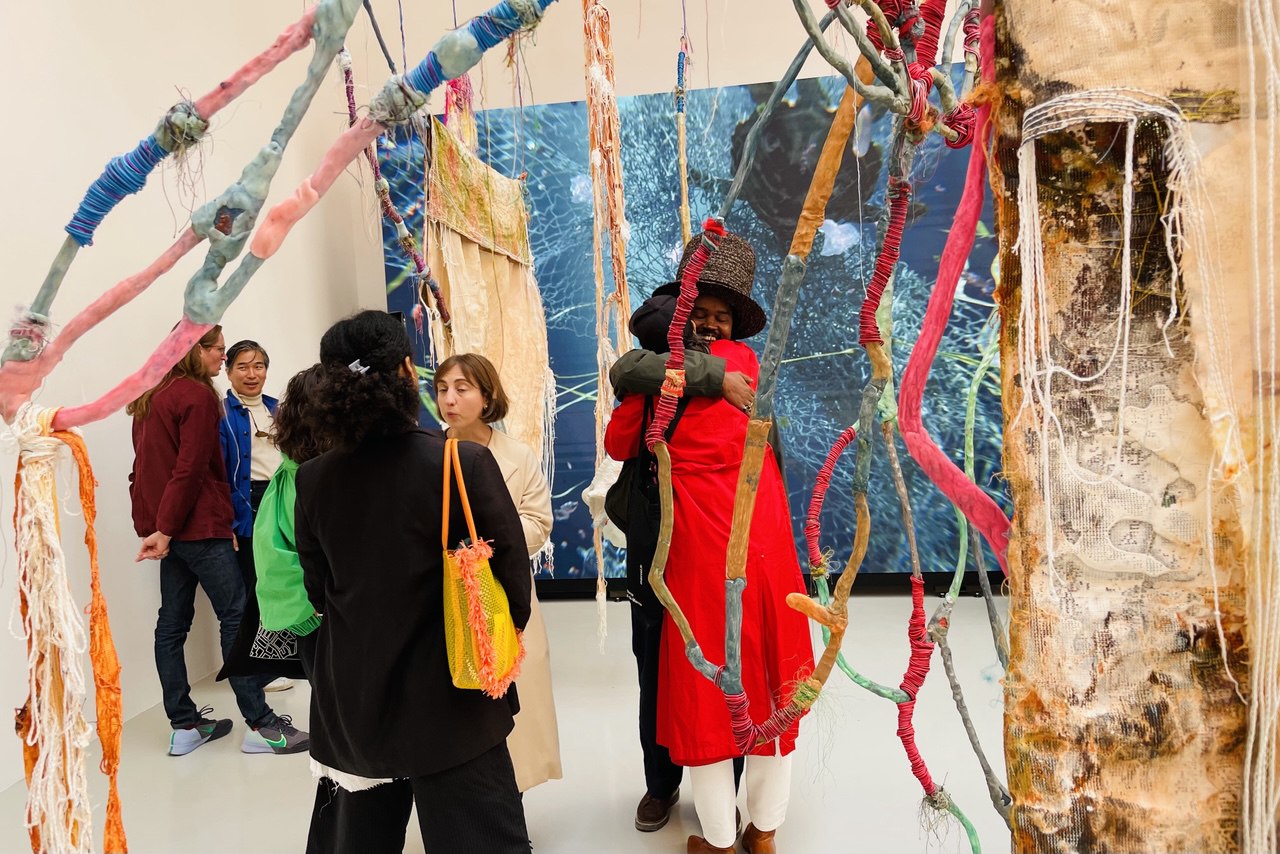
This was the Biennale at its most authentic — a global intellectual community meeting not to perform status, but to exchange perspectives.
The VIP Experience — Thoughtful, Not Performative
Unlike more theatrical Biennale moments, the VIP experience at the French Pavilion was marked by restraint. No excess, no spectacle — just attention. Guests lingered, returned, debated. The pavilion became a place to pause.
Collectors noted the strength of Creuzet’s position within contemporary discourse — a practice rooted in poetry and politics, yet expansive enough to resonate internationally.
Why the French Pavilion Mattered in 2024
Julien Creuzet’s project confirmed a shift in how national pavilions function. Less about representation, more about conversation. Less about flag, more about frequency.
In a Biennale shaped by complexity and contradiction, the French Pavilion stood as a space of listening, resonance, and shared thought.
Editor’s Note
To experience the French Pavilion during preview days was to witness the Biennale before it became crowded — when artists are present, ideas are raw, and access still means dialogue.
Julien Creuzet did not merely represent France in Venice; he convened a moment. And for those present, it was one of the Biennale’s most quietly powerful encounters.