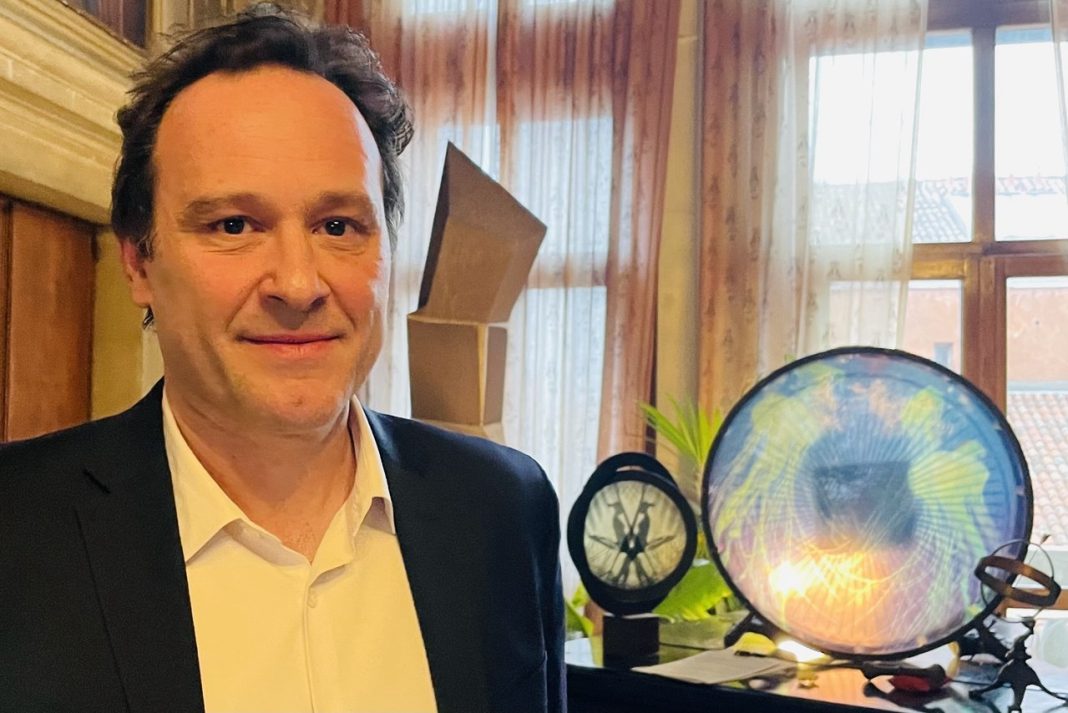

Venice has always been a city of echoes — of history, of ritual, of unresolved narratives. During the Venice Art Biennale 2024, these echoes found a contemporary voice in the work and presence of Yael Bartana, an Israeli artist whose practice moves seamlessly between film, photography, sound, and large-scale installation.
Bartana does not offer easy answers. Instead, she invites viewers into spaces of reflection, where personal memory meets collective history, and where the political and the poetic coexist.
he Power of the Preview — Where Art Meets Influence
The preview opening days of the Venice Art Biennale are a world apart from the public weeks that follow. Access is limited, invitations are highly controlled, and attendance is reserved for a select international circle: museum directors, major collectors, curators, patrons, cultural leaders, and members of royal and diplomatic families. It is during these quiet yet decisive days that reputations are confirmed, conversations are shaped, and artworks enter the global narrative.
Within this rarefied atmosphere, Yael Bartana’s presentation at the 2024 Biennale drew particular attention. Her work was experienced not as a spectacle, but as an encounter — one that invited reflection from some of the most influential figures in the global art community.
A Dialogue with the Global Art Elite
During the VIP preview, Bartana’s work was viewed by an international audience that included museum directors, curators from leading institutions, renowned collectors, cultural patrons, and representatives of global foundations. These early moments — before crowds arrive — are when artists speak directly with those who shape exhibitions, acquisitions, and future collaborations.
Bartana was present, engaging in thoughtful conversations, guiding viewers through the conceptual layers of her work, and listening as interpretations unfolded. This exchange — intimate, focused, and intellectually charged — is where her practice truly comes alive.
Among Royals, Patrons, and Cultural Leaders
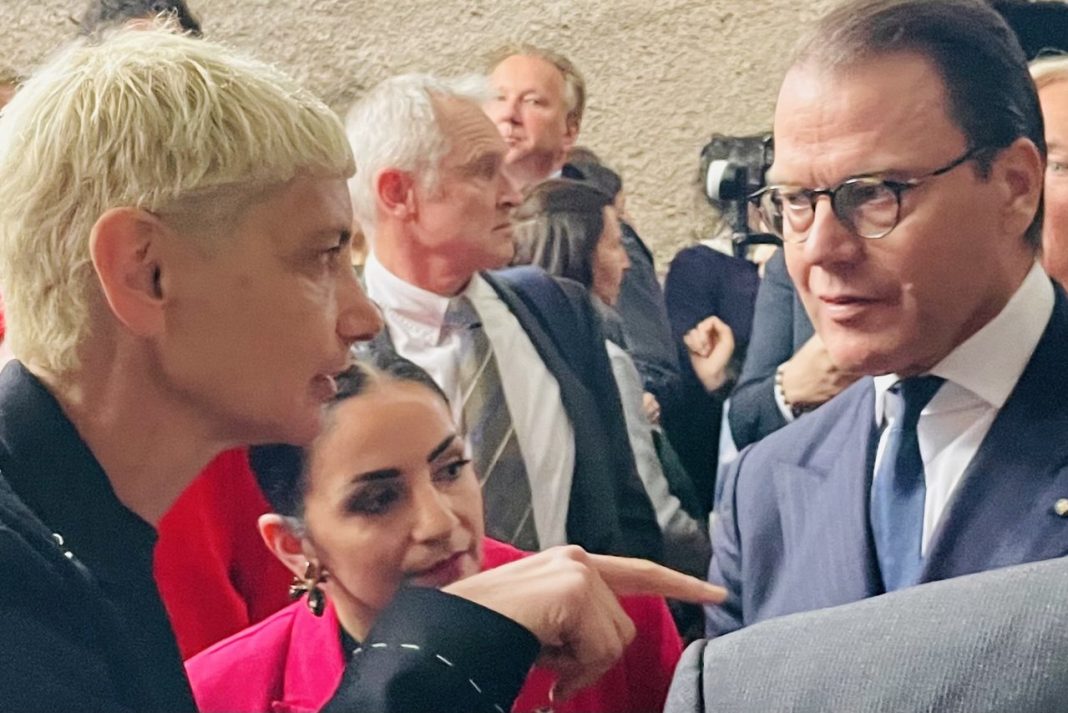
Among the distinguished visitors attending the Biennale preview were members of European royalty known for their commitment to culture and the arts. Prince Daniel, Duke of Västergötland, recognized internationally for his support of culture, innovation, and creative dialogue, was among the notable figures engaging with contemporary art during the opening days.
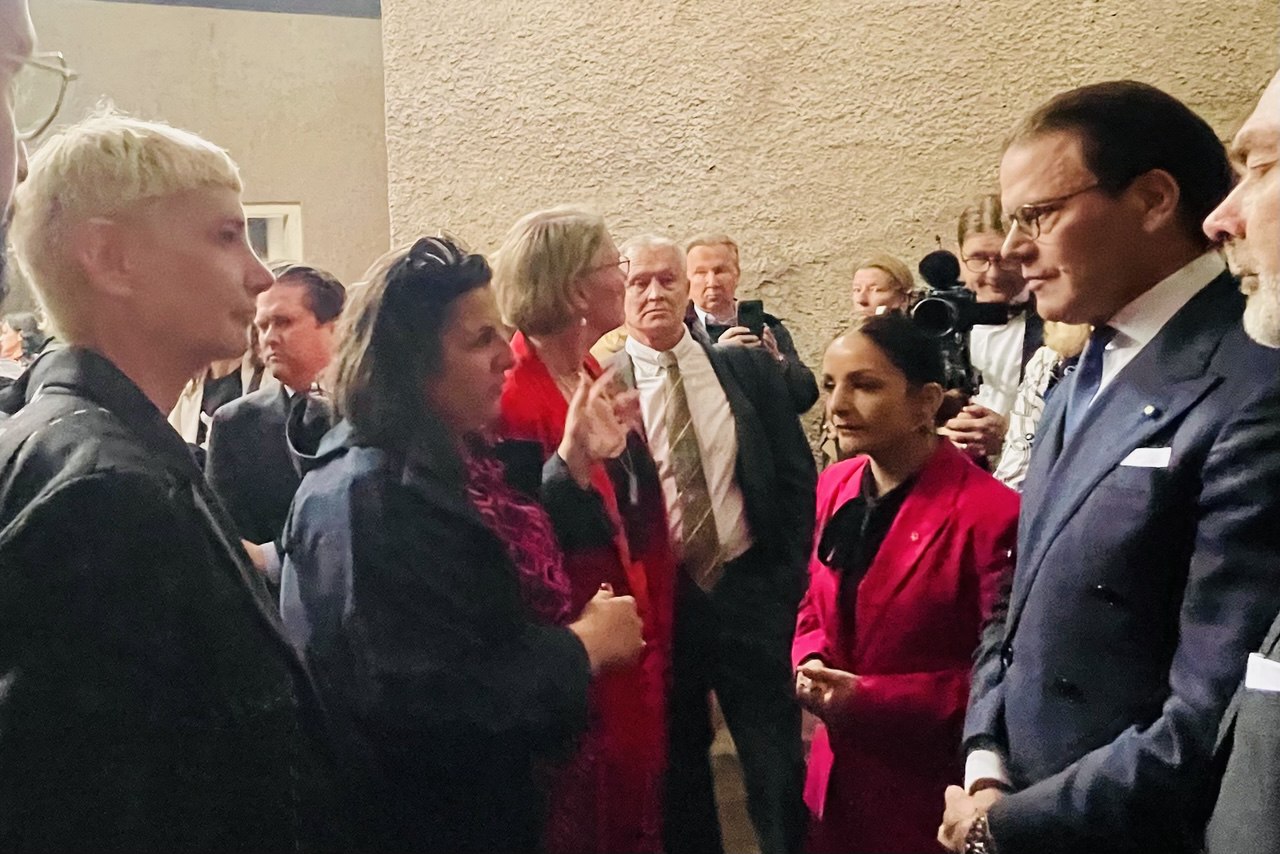
In this context, Bartana’s work became part of a broader cultural conversation — one that transcended national borders and artistic disciplines. Her practice, rooted in questions of identity, memory, and collective responsibility, resonated naturally with an audience accustomed to navigating both cultural heritage and contemporary change.
Venice as a Stage for Cultural Exchange
The Biennale preview is not simply an opening — it is a meeting point of power, culture, and vision. Conversations that begin in Venetian palazzi and Giardini pavilions often continue in museums, biennials, and cultural institutions around the world.
For Yael Bartana, Venice 2024 was not only about showing work, but about dialogue at the highest level — with artists, thinkers, patrons, and global figures who recognize art as a force that shapes how societies understand themselves.
Editor’s Perspective
In the quiet intensity of the VIP preview days, before the Biennale opens to the public eye, Yael Bartana’s work stood as a point of gravity. It attracted those who do not simply observe art, but live with it, support it, and carry its questions into wider cultural and social spaces.
In Venice — a city where history watches every gesture — Bartana’s presence affirmed that contemporary art still has the power to speak directly to influence, reflection, and change.
City for VIP: Yael, your work often feels cinematic, almost ritualistic. Where does this language come from?
Yael Bartana:
I think it comes from observing how societies perform themselves. National ceremonies, collective gestures, monuments — they are all carefully staged narratives. Film allows me to slow them down, to examine them, and sometimes to reimagine them.
I don’t separate mediums in my mind. Photography, sound, installation — they are all tools to build a space where the viewer becomes a participant rather than a spectator.
From Images to Environments
Bartana’s artistic journey spans decades and disciplines. Her early photographic works evolved into complex film narratives, often layered with sound and spatial design. Over time, these elements expanded into immersive installations — environments that feel both intimate and monumental.
Her work frequently explores themes of identity, belonging, power, exile, and collective memory, drawing from historical references while remaining deeply contemporary. Rather than documenting reality, Bartana reconstructs it — asking how stories are told, remembered, and sometimes manipulated.
City for VIP: Venice is a city loaded with symbolism. How does it influence your work here?
Yael Bartana:
Venice is not neutral. It’s a place where beauty and decay exist side by side, where history is visible on every surface. Showing work here is like placing it inside a living archive.
During the Biennale, the city becomes a stage — not just for art, but for conversations. You feel that every project is in dialogue not only with other artists, but with centuries of human ambition and contradiction.
Venice Art Biennale 2024 — A Space for Reflection
At the 2024 Biennale, Bartana’s presence resonated strongly with audiences seeking depth rather than spectacle. Her work invited stillness in a moment often dominated by visual overload. Through carefully composed imagery, soundscapes, and spatial tension, she created moments of pause — asking viewers to confront their own position within the narratives presented.
Collectors, curators, and cultural leaders were drawn not only to the work itself, but to the conversations it generated — about responsibility, memory, and the role of the artist in unstable times.
City for VIP: Your works often feel political, yet deeply human. How do you balance that?
Yael Bartana:
Politics is part of everyday life — it shapes how we move, how we speak, how we remember. But I’m interested in emotions first. Fear, hope, longing, belief. If a work connects emotionally, it can open a space for political thought without becoming didactic.
Art should not instruct; it should invite.
Beyond Mediums, Toward Meaning
What distinguishes Bartana is her ability to move between disciplines without losing coherence. Whether working with film, photography, sound, or installation, her voice remains unmistakable — calm, precise, and charged with intention.
In Venice, this clarity stood out. Amid the global scale of the Biennale, Bartana’s work reminded audiences that storytelling does not need to be loud to be powerful.
City for VIP: What stays with you after Venice?
Yael Bartana:
The encounters. Conversations with strangers, with artists, with people who see something in the work that I hadn’t anticipated. Venice is temporary — the exhibitions will disappear — but these exchanges remain.
That’s the real artwork.
Editor’s Note
Yael Bartana’s presence at the Venice Art Biennale 2024 reaffirmed her position as one of the most thoughtful voices in contemporary art today. Through layered storytelling and immersive environments, she continues to challenge how we see history, identity, and ourselves — not by offering conclusions, but by opening spaces for reflection.
In a city built on water and memory, her work felt not only relevant, but necessary.