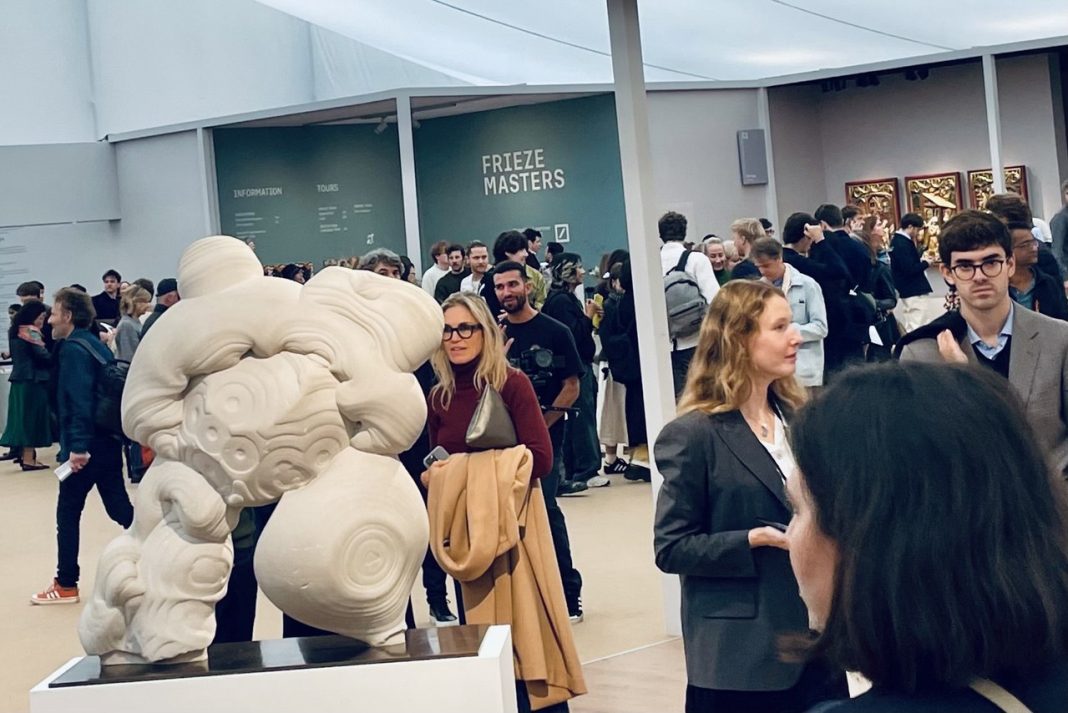

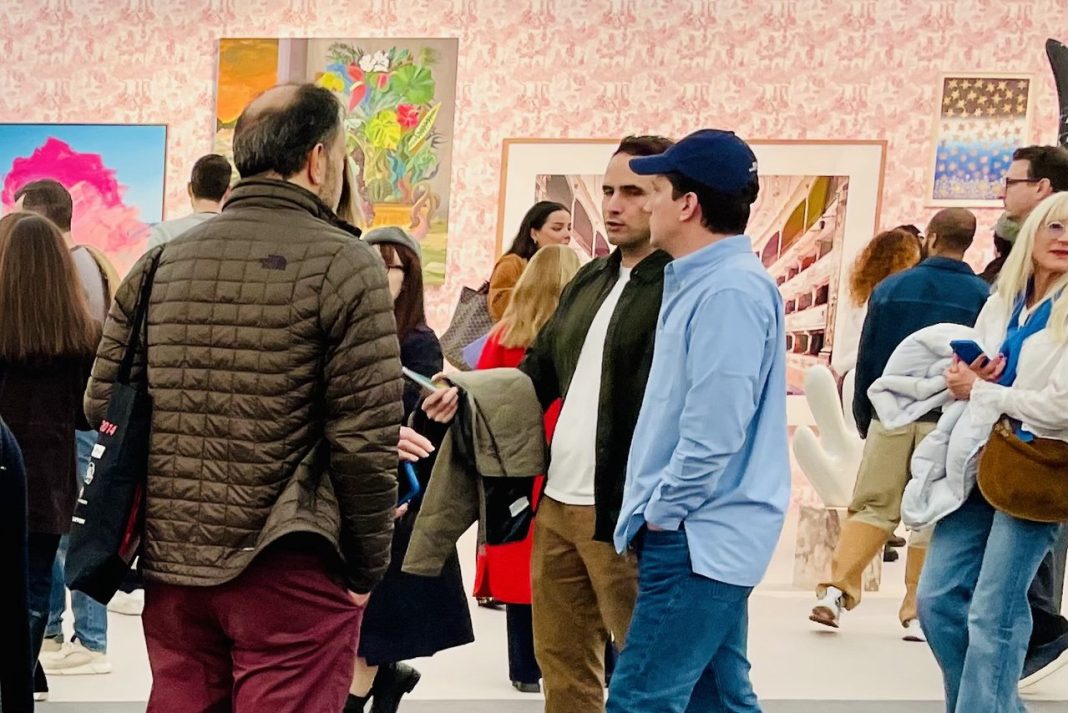
The Frieze London 2025 art fair — held in Regent’s Park, London — confirmed its position as one of the world’s most important contemporary art events. Across Frieze London and Frieze Masters, an estimated 90,000 visitors from more than 108 countries attended over the five-day run, including institutional collectors, international buyers, museum curators and local art lovers.
Atmosphere and the Collector Week Buzz
Frieze London Week remains not just an art fair but a cultural rendezvous. Preview days and VIP collector lounges, including partnerships like the Deutsche Bank VIP lounge, provided social spaces for deal-making, networking and exclusives preview talks with curators and artists. Collectors from Asia, Europe and North America were reported at the fair, many traveling specifically for its concentrated program of fairs, talks, openings and private dinners.
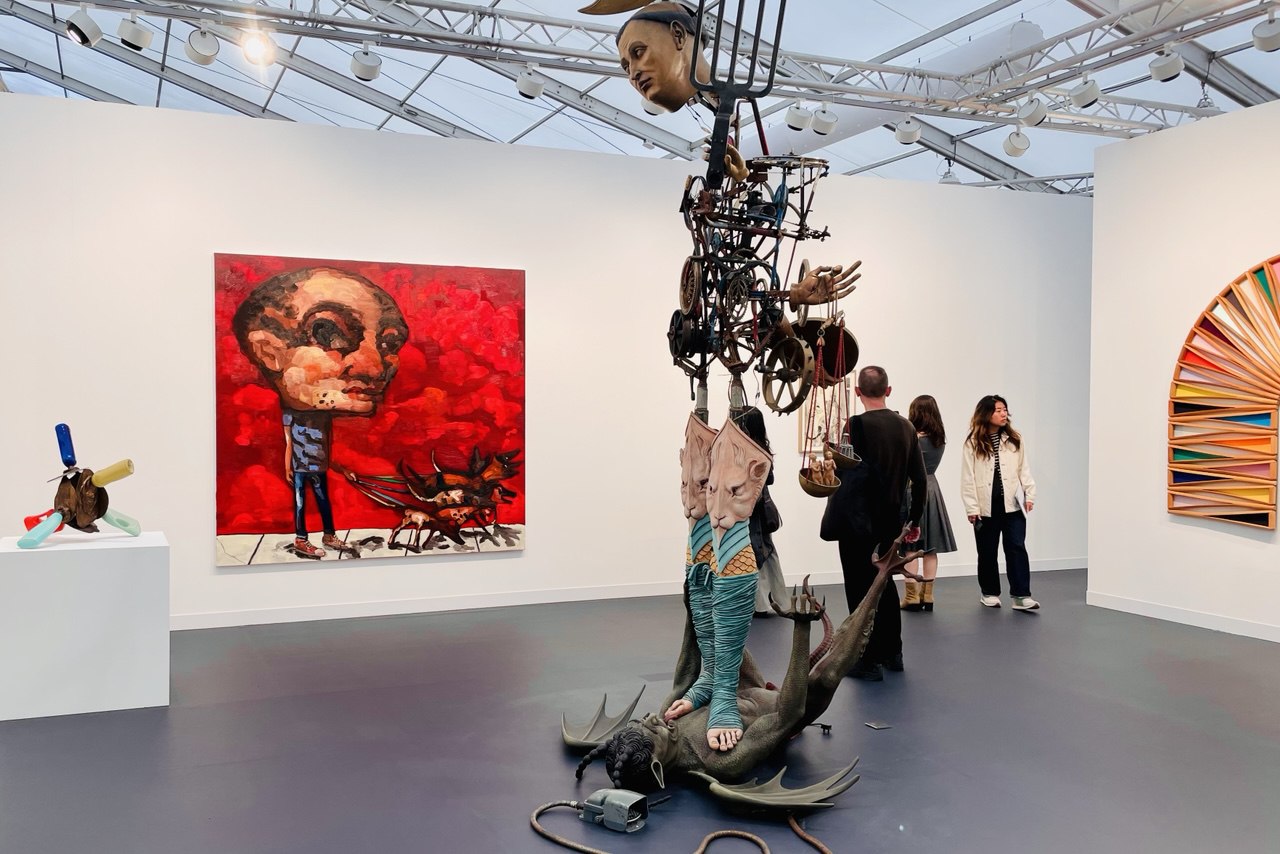
The vibe was a blend of serious market engagement and international cultural exchange, supported by satellite exhibitions, gallery openings and publisher events around London.
Top 5 Galleries and Key Sales
Below is an overview of leading galleries at Frieze London 2025, their notable artworks and reported prices — spanning contemporary blue-chip work through modern classics:
1. Gagosian
-
Standout: Lauren Halsey solo booth (sold-out).
-
Sales: Significant early-day sell-outs signaled strong collector demand; specific prices were not publicly disclosed but estimated in the high six to seven figures for anchor pieces.
-
Collector Response: Buyers flocked early to secure works by Halsey, underscoring Gagosian’s enduring pull at major art fairs.
2. Hauser & Wirth
-
Top Works Sold:
• Gabriele Münter, Der blaue Garten (1909) — SFr2.4 million (~$3 million)
• René Magritte, Le domaine enchanté (1953) — $1.6 million
• Paul Klee, Befestigter Ort (1929) — €1.45 million (~$1.7 million)
• Marcel Duchamp, Jaquette (1956) — $1.35 million
• Alina Szapocznikow, Sculpture-lampe (1970) — $1.2 million -
Feedback: The gallery’s range from historic modern masters to contemporary stars drew sustained engagement across Frieze London and Frieze Masters.
3. David Zwirner
-
Notable Sales:
• Chris Ofili painting — $700,000
• Steven Shearer — $550,000
• Lucas Arruda paintings — $320,000–$350,000 each
• Elizabeth Peyton works on paper — $300,000 -
Collector Note: Zwirner’s booth appealed to collectors seeking strong market names with institutional visibility.
4. White Cube
-
Strong Performances:
• Antony Gormley sculpture — £850,000 (~$1.1 million)
• Tracey Emin pieces — £425,000 and £95,000 (~$570,000/$127,000)
• Shao Fan, Cai Guo-Qiang, Marguerite Humeau and others across price tiers -
Market Reaction: A mix of mid-career and blue-chip artists made White Cube a major sales node throughout the fair.
5. Lisson Gallery
-
Sales Highlights:
• Otobong Nkanga tapestry — $600,000
• Ryan Gander sculpture — £85,000 (~$114,000) -
Collector Response: Buyers clearly valued the gallery’s contemporary focus, particularly sculptural and large-format works.
Other strong performances were reported by Pace Gallery, Sprüth Magers, Timothy Taylor, Karma and dozens of other participants — from blue-chip powerhouses to focused specialist galleries selling at mid-market price points.
Representative Sales and Price Spectrum
Art sold at Frieze London 2025 covered a wide range of price levels — from established multi-million-dollar works to compelling mid-range contemporary pieces:
-
High-end masterworks (modern and classic) commanding $1 million + prices at Hauser & Wirth and others.
-
Major contemporary works in the $300,000 – $800,000 range (Zwirner, White Cube, Karma).
-
Gallery works sold in the £70,000 – £95,000 range (Timothy Taylor’s Daniel Crews-Chubb).
-
Focus section sales with works from $6,000 – $55,000 — providing entry points for emerging collectors.
This breadth showed that while blockbuster sales attract headlines, mid-market contemporary works remain vital to fair dynamics and collector interest.
VIP Collector Engagement
The Deutsche Bank VIP Lounge and similar hospitality spaces hosted private viewing experiences, meetings between top advisors and collectors, and curated previews, enabling high-end clients to negotiate acquisitions before public opening hours. These lounges continue to function as commercial hubs where major deals get initiated in a quieter setting.
Collectors reported that these environments helped facilitate targeted acquisition conversations away from the main thoroughfares of the park, often leading to early holds on blue-chip works before they were publicly marked “sold”.
Visitor Trends and Global Reach
The most recent editions of Frieze London reinforce its global art-market influence:
-
Visitor count: ~90,000 over five days.
-
International scope: Attendees came from 108 countries, with strong representation from European, North American and Asian collectors.
-
Institutional presence: Record numbers of museum groups were present, adding acquisition departments alongside private collectors.
This international footprint underscores that Frieze London is a meeting point for global art capital — both economic and cultural — attracting audiences far beyond the UK domestic market.
Conclusion: Frieze London 2025 in Context
Frieze London 2025 combined market strength, collector diversity and cultural vibrancy. Galleries from Gagosian to White Cube and David Zwirner demonstrated that the fair can support both seven-figure blue-chip transactions and healthy mid-market activity, while VIP lounges and early-preview sales underscored the significance of private collector engagement. With almost 90,000 visitors, Frieze remains one of the world’s most influential annual art events — a place where museum quality meets market momentum.