
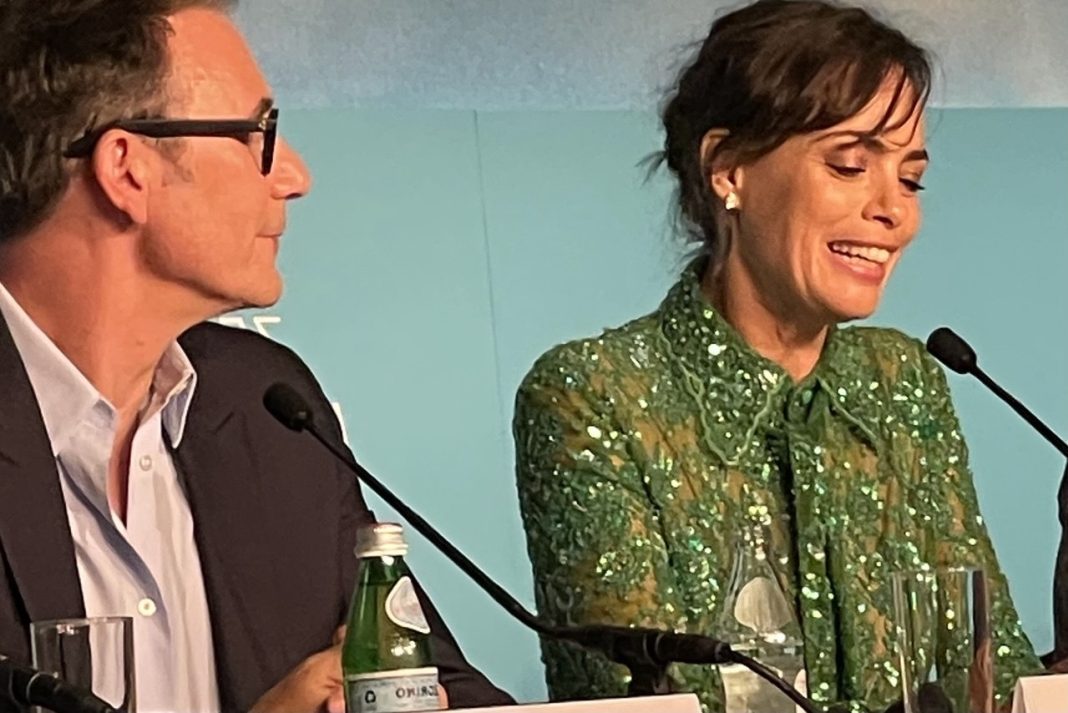
On a sun-drenched afternoon at the Hôtel Barrière Le Majestic, Bérénice Bejo arrives with the quiet elegance that has made her one of France’s most adored actresses. Poised yet warm, magnetic yet approachable, she embodies the kind of glamorous sincerity that Cannes audiences—and global cinema lovers—never forget.
She smiles, settles into a chair overlooking the sparkling Mediterranean, and the conversation begins like an intimate rediscovery of a star we already admire.
“Cannes is a place where cinema breathes differently” – Bérénice Bejo
As the French-Argentine actress steps onto the red carpet for the premiere of her film Final Cut (directed by Michel Hazanavicius), the photographers erupt in a familiar frenzy. Cannes has always loved Bejo—and she returns that affection with genuine emotion.
“Every time I come back to Cannes, something inside me realigns,” she says.
“It’s a place where cinema isn’t just watched—it is lived.”
For Bejo, Cannes is a reminder of the extraordinary journey that brought her here: from her breakout as Christiana in A Knight’s Tale to her global triumph in The Artist, where her luminous performance as Peppy Miller earned her an Oscar nomination and the César Award for Best Actress.
She still calls The Artist “a miracle wrapped in friendship,” a film that forever changed her life—and elevated her to international stardom.
On Final Cut and working with Michel Hazanavicius again
Final Cut—a playful, audacious French remake of the cult Japanese film One Cut of the Dead—marks another collaboration with her partner, director Michel Hazanavicius. For Bejo, returning to his artistic universe feels both new and familiar.
“Michel challenges actors in the best way,” she says.
“He gives you freedom, and he gives you danger. And as an actor, you need both.”
Her role in Final Cut demanded humor, spontaneity, and a joyful acceptance of chaos.
She laughs:
“Sometimes Cannes needs a bit of craziness. We were happy to bring it.”
A French-Argentine identity that shapes her art
Born in Buenos Aires and raised in France, Bejo carries both cultures in her voice, gestures, and emotional vocabulary.
“Argentina gave me heart. France gave me discipline. Together they made me an actress,” she reflects.
This dual heritage often enriches her performances with warmth, passion, and a touch of melancholy that audiences find irresistible.
The VIP side of Cannes: Where cinema and elegance meet
While much of Bejo’s time in Cannes is dedicated to press, screenings, and premieres, she admits that the behind-the-scenes gatherings—the private dinners, the intimate conversations with filmmakers, the spontaneous reunions—are part of the magic.
“Cannes is glamorous, yes, but it’s also deeply human,” she says.
“You meet old friends at the hotel bar, you share stories with new directors… you connect.”
Bejo is a fixture at the festival’s most sought-after receptions, yet she remains grounded, gracious, and fully present—a rare quality in the whirlwind of the Croisette.
Looking forward: roles, dreams, and a future shaped by passion
When asked about upcoming projects, Bejo smiles with a spark that suggests there are many.
“I want to keep surprising myself,” she says.
“Cinema still excites me. That’s the secret.”
Whether she is playing a rising silent-era star, a modern woman caught in a comedic zombie chaos, or a complex dramatic lead, Bérénice Bejo brings depth, clarity, and luminous emotion.
A Cannes Icon with Authentic Soul
As sunset casts a golden glow over the Croisette, the interview concludes—but Bejo’s presence lingers. She embodies everything Cannes celebrates: artistry, elegance, risk-taking, and that indefinable spark that turns a talented actress into a global icon.
Bérénice Bejo is not just part of cinema’s history—she’s shaping its future, one unforgettable performance at a time.